

Reducing Emergency Room Transfers with Point of Care Ultrasound
The challenge
Too many people living in long-term care (LTC) are sent to the emergency room (ER) for issues that could be investigated, assessed, and potentially treated at the bedside with Point of Care Ultrasound (PoCUS). ER transfers take a significant physical and emotional toll on residents: increasing their risk of complications, injury, and mortality.
To address this challenge, Vancouver Coastal Health connected with The CAN Health Network to explore PoCUS solutions for LTC. PoCUS allows trained practitioners to assess and diagnose clinical problems on site and immediately incorporate the findings into resident care: enabling accessible, timely, and accurate person-centred treatment decisions.
The solution
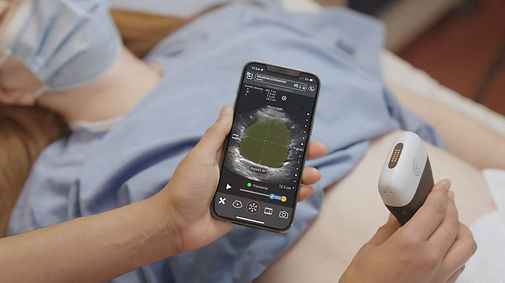
Clarius Mobile Health’s handheld PoCUS offers high-definition ultrasound at the bedside, reducing ER transfers and providing faster diagnosis of bladder, skin, and vascular issues. Versatile probes with secure cloud storage ensure privacy, compliance, and broad clinical use, and Clarius’s AI-assisted interpretation features and large library of training videos help onboard new staff to the devices.
The results
The project was conducted across five LTC homes operated by Vancouver Coastal Health. Over the 13-month study period:
-
75+ bedside scans were completed across 5 LTC homes (averaging 5.6 per month), reducing preventable ER transfers, improving outcomes, and ensuring timely treatment
-
Providers noted strong usability features including imaging quality, size, and portability
The benefits
By implementing Clarius, 5 Vancouver Coastal Health LTC homes were able to reduce ER transfers for residents: decreasing the risks and health system costs associated with ER transfers and improving the delivery of person-centred care.
Learn more about Clarius’s PoCUS here.